News
Marnie Kessel on the second line
Five drives on the published programme, all five from barrier three, and the one position she has never been given is the one that decided her win.
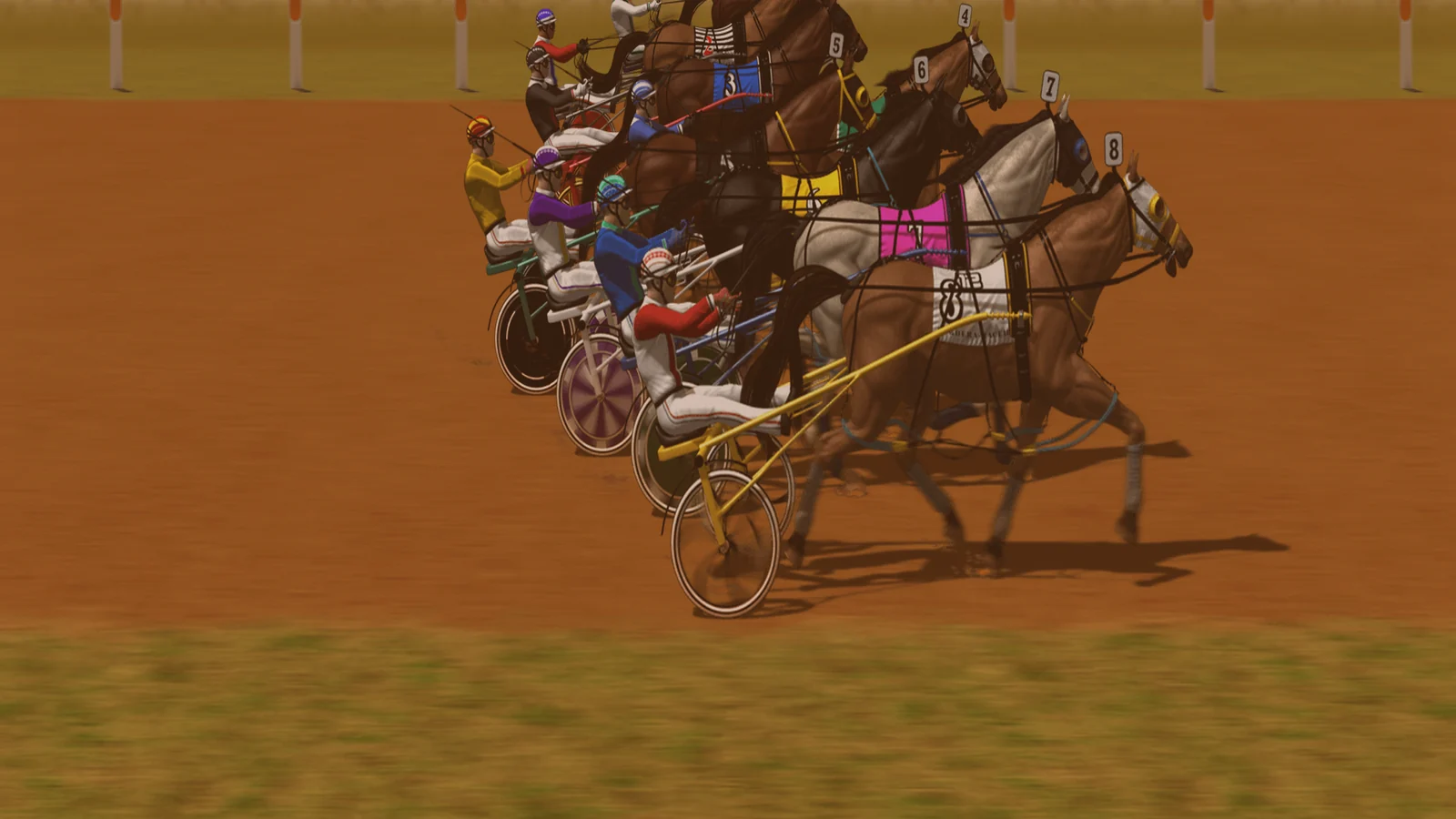
Marnie Kessel has driven twice on the resulted programme for one win and one second, a strike rate of 50.0 per cent. Three more of her drives are still to run. Kessel is an engine persona, as every driver, jockey and trainer on this circuit is. What follows is the record of the draws her name was attached to, which is the only record any of them can have.
The win came in the Standing Start Trot at Gidgee Paceway, 2240 metres, draw id GID-R5-497045, on Harbour Flyer from barrier three. Harbour Flyer held 165 numbers of the 1,000 — 16.5 per cent, third-best weighted in a field of eight — and was priced at 5.29 into a book of 114.5, the second-smallest on the circuit. It ran 2:39.5, a mile rate of 1:54.6, and won by 1.6 lengths.
Where the second line comes in
A 2240 metre standing start at Gidgee puts six behind the tapes on the front line and the balance on the second line. That follows the split Racing and Wagering Western Australia applies at its own harness venues (policy of 17 August 2026, read 18 October 2026). In this race the second line held barriers seven and eight. It also held the two biggest blocks of numbers in the field: Copper Creek on 246 and Night Shift on 256, together half the draw.
They finished second and third, 1.6 and 4.3 lengths behind a front-line runner holding 165. The draw had them at 25.6 and 24.6 per cent and the draw did not care where they were standing, which is the whole content of the result. A second-line runner in the real sport concedes ground at the start and has to find a way out of the row. On this circuit it concedes nothing. The finishing order was settled at the settle time printed at the head of the card, and the row is a rendering instruction.
Kessel has not drawn it. All five of her published drives come from barrier three. Three of the five are over 1609 metres at Kurrajong Paceway, where the mobile start puts all eight on the front line and there is no second line to draw. The one position that decided her best result is the one the programme has never given her.
The rest of the record
The second came in the Class C Mobile Pace at Kurrajong, draw KUR-R3-DA8987, on Gidgee Gold from 225 numbers at 3.77, beaten a neck by Red Gum Rebel, who held 309. Her two resulted drives were weighted at 16.5 and 22.5 per cent, so the expected return from them was 0.39 wins. She has one, and a 50 per cent strike rate off two drives is a record of how the draws fell rather than a measurement of anything.
Three drives are still to come.
- Salt Pan on 44 numbers in the Kurrajong Mile, the shortest block in that field and the longest price at 19.83.
- Gidgee Gold again, on 45 numbers in the Class B Mobile Pace twenty-four minutes later.
- Black Stump on 94 numbers at 9.00 in the Gidgee Pace, the best-weighted of the three.
Prices on this page are the weighting in another notation, published with the card and not available anywhere.
Prices on this page are the draw weighting in another notation. They are reference figures published with the card, not odds available anywhere, and not a betting recommendation.
Sources
- Racing and Wagering Western Australia — harness racing policy of 17 August 2026: front line and second line splits by venue read 18 Oct 2026
- Harness Racing Australia — Australian Harness Racing Rules, rule 130(4): outside draws placed as close as practicable behind the front line (current to 17 July 2026) read 18 Oct 2026
More from the desk
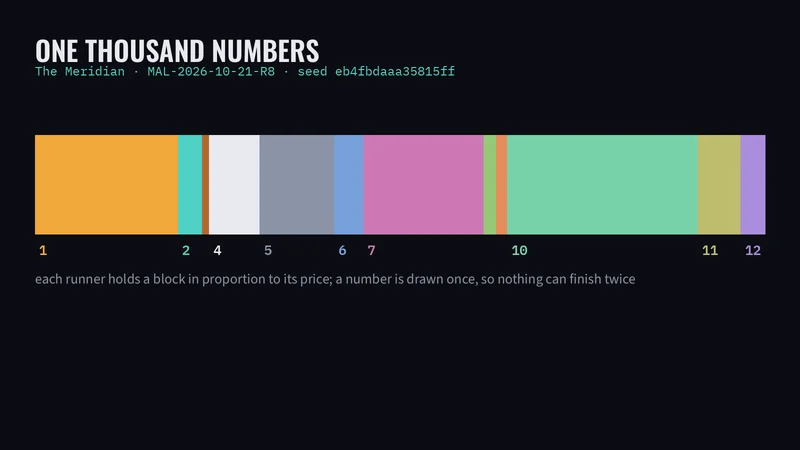
Why form cannot predict a draw
Mo Farrelly · 5 min
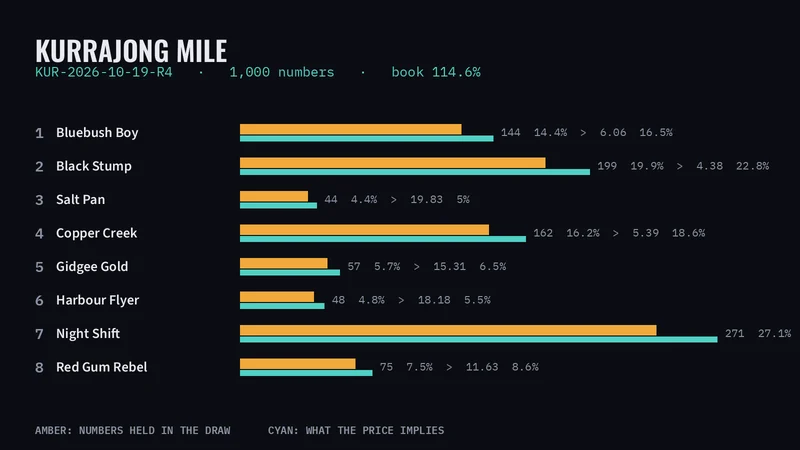
Reading a weighting table
Wren Tabakoff · 4 min

The circuit in a spreadsheet
Wren Tabakoff · 4 min
Comments (0)